Who is Tenderbody
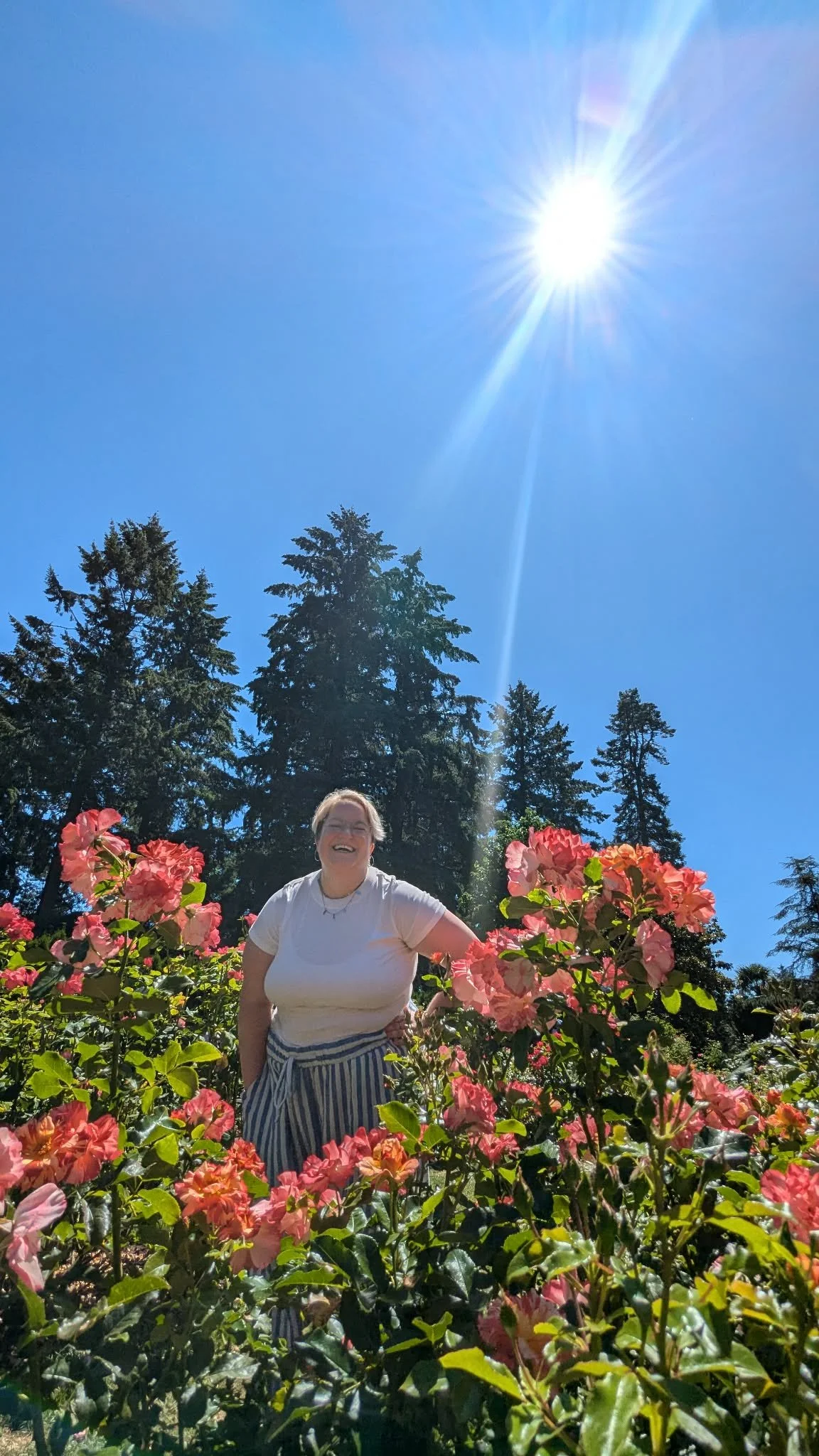
Hi, I’m Sam (they/them).
I’m the human behind Tenderbody. My work lives in the space between body, grief, pleasure, and care. I’m a somatic practitioner, facilitator, and social worker offering embodied, consent-based care rooted in justice and community.
My work is shaped by both training and lived experience. A commitment to trauma-informed care, consent, and a steady attention to power runs through everything here. Shared identity is not assumed to mean shared experience. Each person’s story is met with curiosity, humility, and care.
There is ongoing shaping by the communities this work is in relationship with, the people who offer their teachings, and the accountability that keeps this practice honest. Integrity here is not static. It is something tended, in relationship, over time.
What is Tenderbody
Tenderbody is a practice of embodied accompaniment for people moving through grief, pleasure, transition, and becoming.
A space for slowing down. For listening. For being with what is here, without urgency to fix or resolve.
Through workshops, circles, one-on-one sessions, and collaborative offerings, Tenderbody creates space for rest and nervous system support, for rebuilding body trust and connection, for consent and co-regulation, and for collective tenderness.
What is growing
Over time, Tenderbody will expand into deeper reproductive justice-informed accompaniment, trans and gender support, collaborative clinics, and retreat spaces rooted in collective care.
My training & approach
This work is shaped by a mix of formal clinical training, lived experience, community-based movement work, contemplative practice, and ongoing study in trauma, embodiment, and care.
There isn’t a single lineage or framework that holds Tenderbody. It’s intentionally interdisciplinary. Rooted in both professional ethics and lived, relational, and collective ways of knowing.
Clinical & Ethical Foundation
I am a Licensed Master Social Worker (LMSW established in 2020) in Texas, with formal training in trauma-informed care, behavioral health, and professional ethics.
My clinical foundation includes ongoing study in trauma and PTSD, crisis response and suicide risk assessment, intimate partner violence, substance use, and professional ethics, documentation, and boundaries.
At the same time, I understand social work as a field that is deeply entangled with carceral systems, state surveillance, and forms of control that have historically caused harm, particularly to Black, Indigenous, disabled, queer, trans, and poor communities.
My relationship to being a social worker is not neutral.
I am actively engaged in ongoing learning and unlearning around:
the role of social work in policing, child welfare, and institutionalization
how clinical frameworks can pathologize survival responses
the ways “helping professions” can replicate power, coercion, and harm
This means I do not treat clinical training as the ultimate authority in this work.
Instead, I hold it alongside community-based knowledge, lived experience, and political analysis, and I practice with attention to consent, autonomy, and the broader systems shaping people’s lives.
My intention is to use what is useful from clinical training while actively resisting and unlearning what causes harm.
Lived Experience & Relational Understanding
My work is shaped not only by training, but by lived experience navigating body, identity, care, and survival within systems that are often inaccessible, stigmatizing, and harmful.
I’m a fat, chronically ill, visibly queer, non-binary person who has not medically transitioned. I move through the world with both marginalization and significant privilege, including white privilege and cis-passing privilege.
That reality matters.
There is an ongoing responsibility to understand how that positioning shapes this work, including within queer and trans spaces.
There is also lived experience with mental health and intimate partner violence. An understanding of how systems of care can pathologize, dismiss, or fail to support people in meaningful ways.
These experiences shape how I understand safety, consent, autonomy, and what care actually requires.
I bring particular tenderness to working with people navigating fatphobia, medical harm, trauma, and decisions about their bodies within restrictive or politicized systems.
I approach this work within these conditions, and with an ongoing commitment to accountability, learning, and unlearning.
Reproductive Justice & Community-Based Care
Tenderbody is deeply shaped by reproductive justice organizing, harm reduction, and mutual aid. I’ve trained with and learned from movement spaces including:
Abortion work: Abortion Fund board member (2020 - Present); NNAF Network Movement Building graduate (2025); Texas Abortion Advocacy Network graduate (2024); Abortion hotline advocate (2020 - 2022); Next Gen Leader graduate (2020); ad hoc national training.
Harm reduction networks: Communities in Recovery Narcan Training (2026); THRA harm reduction trainings (2023, 2024, 2025); mutual aid events.
Sexuality education facilitation and pleasure workshops: Our Whole Lives Sexuality Education Facilitator graduate (2025); SisterSong Conference (2020).
Spaces focused on collective liberation, safety, and survival: Before We Were White, ancestral recovery for collective liberation (2024-2025); Study & Action for Palestine Cohort (2025); Stay Safe Y’all: Energetic and Digital Skills for an Unsafe World (2025); mutual aid and organizing spaces in Texas and North Carolina.
This grounding matters.
Care is never abstract. It is shaped by access, policy, risk, and survival under systems of oppression.
This work grounds my understanding that care is shaped by access, policy, risk, and survival through oppression and informs my commitment to autonomy, dignity, and real-world, responsive support.
Somatic, Spiritual, & Embodiment Practice
Tenderbody draws from somatic practice, contemplative traditions, and decolonial approaches to spirituality and embodiment.
My background includes:
a decade long meditation practice and process facilitation background
study in contemplative and spiritual frameworks
decolonial and intuitive approaches to meaning-making and ritual
embodied practices that center sensation, pacing, and nervous system awareness
This includes, but is not limited to:
Spiritual and contemplative learning ( Red Tarot, a course in decolonial divinatory literacy with Christopher Marmolejo (2025); Young Meditators Group (2014-2024; Shambhala Level 1 (2023); Toltec Thirteen Moons Program with HeatherAsh Amara (2008-2011)
Embodiment, consent, and relational healing frameworks (Radical Permission Institute, 2024; Embodiment Institute, 2024-2026)
Not performance. Not compliance.
This dimension of the work supports reconnection with body, intuition, and internal rhythm in ways that are non-coercive and grounded in choice.
Ongoing Study and Deepening Practice
I am continually deepening my work through ongoing study in areas including:
Somatic trauma therapy: IFS-informed approaches through Embody Lab, 2026; Politics of Trauma with Staci Haines 2025-2026)
Reproductive training: whole spectrum doula training and holistic abortion care (Birthing Advocacy Doula Trainings and Holistic Abortion Academy)
Death Doula: grief, loss, and end-of-life accompaniment doula (Going with Grace End of Life Doula Training)
Herbalism and ritual-based grief practices (guided by teacher, Mara June)
Learning happens over time. In layers. In relationship.
Community Leadership & Collaboration
My practice is shaped by long-term involvement in community care, organizing, and collective survival work.
This includes reproductive health support and supply distribution, organizing spaces for LGBTQIA+, fat, and disabled community members, youth support and crisis navigation, and mutual aid and community-based care spaces.
These experiences ground my work in accountability, relationship, and the realities people are navigating every day.
How I Practice
Care is not neutral.
Helping professions, including social work, have often functioned as extensions of control, surveillance, and harm.
This work is shaped by ongoing unlearning and a commitment to care that prioritizes consent, autonomy, and relational accountability over authority or expertise.
There is no strict separation here between professional, personal, and community knowledge.
The work is integrative. Shaped by clinical ethics, lived experience, movement work, political context, and somatic and spiritual practice.
Care is understood as relational and embodied. Shaped by systems. Not something that can be standardized, extracted, or imposed.
What that makes possible:
trauma-aware without pathologizing
justice-rooted and materially grounded
spiritual without coercion or hierarchy
responsive to capacity, context, and consent
Scope & Integrity
While this work draws from clinical training, Tenderbody is not therapy, medical care, or crisis response.
There is a clear scope of practice, along with relationships for referral when needed.
The intention is to offer care that is transparent, consent-based, and grounded in both skill and humility, so you can decide whether this feels like a fit.
Ready to connect?
Explore current offerings here.
Contact us
Interested in working together? Fill out some info and we will be in touch shortly. We can’t wait to hear from you!